


Fic: Web of Fate, Epilogue
Sep. 13th, 2026 10:24 am![[personal profile]](https://www.dreamwidth.org/img/silk/identity/user.png) rodo
rodoTitle: Web of Fate
Fandom: Carnival Row
Author:rodo
Chapter: E/17+E
Length: 566 words (77,000 in total)
Rating: 16+
Genre: Alternate Universe – Canon Divergence, Worldbuilding, Adventure
Characters: Rycroft Philostrate, Jonah Breakspear, Vignette Stonemoss, Runyan Millworthy, Darius Prowell, Absalom Breakspear
Pairing: Philo/Vignette
Warnings/Labels: war, and mentions/occasional depictions of associated atrocities; canon-typical fantasy racism
Disclaimer: Everything you recognise belongs to Amazon, of course
A/N: I started this story in August 2021, and I finished the draft in 2022, so this was all written prior to the second season. So some of the worldbuilding contradicts what was shown in season 2. Still, I had so much fun re-reading this lately that I thought I’d polish it up some more and post it anyway, in case some of you will like it as well. Since it’s an AU, the plot of the second season is not that relevant anyway.
Summary: A year after the attempted assassination of Chancellor Absalom Breakspear, The Burgue is at war, and it’s not going well. In order to break the stalemate at the front, some unlikely soldiers are recruited to fight in a place nobody expected, and Philo and Jonah find themselves caught up in it against their expectations.
( Absalom Breakspear found that the hardest part of being a parent was letting go. )
Fandom: Carnival Row
Author:
rodoChapter: E/17+E
Length: 566 words (77,000 in total)
Rating: 16+
Genre: Alternate Universe – Canon Divergence, Worldbuilding, Adventure
Characters: Rycroft Philostrate, Jonah Breakspear, Vignette Stonemoss, Runyan Millworthy, Darius Prowell, Absalom Breakspear
Pairing: Philo/Vignette
Warnings/Labels: war, and mentions/occasional depictions of associated atrocities; canon-typical fantasy racism
Disclaimer: Everything you recognise belongs to Amazon, of course
A/N: I started this story in August 2021, and I finished the draft in 2022, so this was all written prior to the second season. So some of the worldbuilding contradicts what was shown in season 2. Still, I had so much fun re-reading this lately that I thought I’d polish it up some more and post it anyway, in case some of you will like it as well. Since it’s an AU, the plot of the second season is not that relevant anyway.
Summary: A year after the attempted assassination of Chancellor Absalom Breakspear, The Burgue is at war, and it’s not going well. In order to break the stalemate at the front, some unlikely soldiers are recruited to fight in a place nobody expected, and Philo and Jonah find themselves caught up in it against their expectations.
( Absalom Breakspear found that the hardest part of being a parent was letting go. )
Fic: Web of Fate, Chapter 17
Sep. 13th, 2026 10:21 amrodoTitle: Web of Fate
Fandom: Carnival Row
Author:rodo
Chapter: 17/17+E
Length: 4,107 words (77,000 in total)
Rating: 16+
Genre: Alternate Universe – Canon Divergence, Worldbuilding, Adventure
Characters: Rycroft Philostrate, Jonah Breakspear, Vignette Stonemoss, Runyan Millworthy, Darius Prowell, Absalom Breakspear
Pairing: Philo/Vignette
Warnings/Labels: war, and mentions/occasional depictions of associated atrocities; canon-typical fantasy racism
Disclaimer: Everything you recognise belongs to Amazon, of course
A/N: I started this story in August 2021, and I finished the draft in 2022, so this was all written prior to the second season. So some of the worldbuilding contradicts what was shown in season 2. Still, I had so much fun re-reading this lately that I thought I’d polish it up some more and post it anyway, in case some of you will like it as well. Since it’s an AU, the plot of the second season is not that relevant anyway.
Summary: A year after the attempted assassination of Chancellor Absalom Breakspear, The Burgue is at war, and it’s not going well. In order to break the stalemate at the front, some unlikely soldiers are recruited to fight in a place nobody expected, and Philo and Jonah find themselves caught up in it against their expectations.
( The haruspex breathed her last, and Philo awoke. )
Fandom: Carnival Row
Author:
rodoChapter: 17/17+E
Length: 4,107 words (77,000 in total)
Rating: 16+
Genre: Alternate Universe – Canon Divergence, Worldbuilding, Adventure
Characters: Rycroft Philostrate, Jonah Breakspear, Vignette Stonemoss, Runyan Millworthy, Darius Prowell, Absalom Breakspear
Pairing: Philo/Vignette
Warnings/Labels: war, and mentions/occasional depictions of associated atrocities; canon-typical fantasy racism
Disclaimer: Everything you recognise belongs to Amazon, of course
A/N: I started this story in August 2021, and I finished the draft in 2022, so this was all written prior to the second season. So some of the worldbuilding contradicts what was shown in season 2. Still, I had so much fun re-reading this lately that I thought I’d polish it up some more and post it anyway, in case some of you will like it as well. Since it’s an AU, the plot of the second season is not that relevant anyway.
Summary: A year after the attempted assassination of Chancellor Absalom Breakspear, The Burgue is at war, and it’s not going well. In order to break the stalemate at the front, some unlikely soldiers are recruited to fight in a place nobody expected, and Philo and Jonah find themselves caught up in it against their expectations.
( The haruspex breathed her last, and Philo awoke. )
Pumpkin Autumn Challenge : Le château des animaux 1 (Xavier Dorison)
Sep. 13th, 2026 09:59 amflo_neljaCatégorie : Les fourberies de Goupil (Satire sociale - Ruse - Pouvoir - Inégalité - Comique - Fable - Conte - Anthropomorphisme - Animaux - Nature)
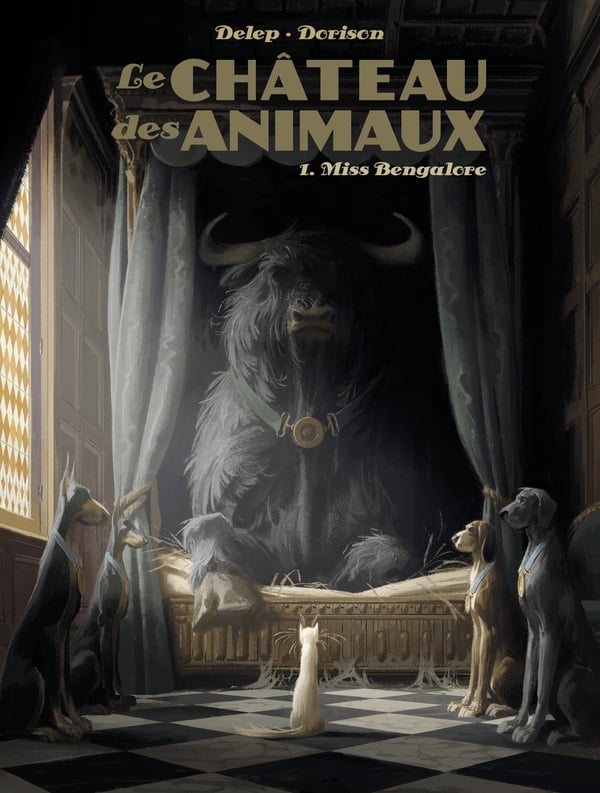
Tout le monde disait du bien de cette bande dessinée, qui est une réécriture/suite de La ferme des animaux, où le but de l'auteur est d'argumetner qu'une révolution non-violente est possible. C'est clairement ambitieux et, j'aoserais dire, parfois prétentieux.
Dans cette version de l'histoire, qui se passe dans un château en ruine, les animaux qui ont le pouvoirs ne sont pas les plus vicieux/rusés mais les plus forts physiquement. L'héroïne, une cahtte qui s'aoccupe de deux enfants, va décrouvrir la nécessité de la rébellion, voir mourri des gens qu'elle aime, s'allier avec des gens qu'elle avait l'habitude de mépriser, voir ce que peut faire ridiculiser le pouvoir sans violence.
J'ai trouvé que ça ne fonctionnait pas bien comme déconstruction d'Orwell, parce que même si ça essaie de s'y opposer, ça part toujours sur le principe que l'intelligence et la ruse va gagner, ça accorde juste, comme une vieille faible, plus de pouvoir aux gens rusés. Et, comme Orwell, c'est une fable, avec le symbolisme et les idées qui sont le but, pas construire des personnages avec un peu de complexité.
Je comprends les gens qui aiment bien, je vais dire que ce n'est pas pour moi, et m'arrêter au bout d'un tome. Ce n'est pas la première fois que je lis une BD à succès de Dorison, sans y trouver d'intérêt pour moi, et je crois que je vais arrêter d'essayer.
Tout le monde disait du bien de cette bande dessinée, qui est une réécriture/suite de La ferme des animaux, où le but de l'auteur est d'argumetner qu'une révolution non-violente est possible. C'est clairement ambitieux et, j'aoserais dire, parfois prétentieux.
Dans cette version de l'histoire, qui se passe dans un château en ruine, les animaux qui ont le pouvoirs ne sont pas les plus vicieux/rusés mais les plus forts physiquement. L'héroïne, une cahtte qui s'aoccupe de deux enfants, va décrouvrir la nécessité de la rébellion, voir mourri des gens qu'elle aime, s'allier avec des gens qu'elle avait l'habitude de mépriser, voir ce que peut faire ridiculiser le pouvoir sans violence.
J'ai trouvé que ça ne fonctionnait pas bien comme déconstruction d'Orwell, parce que même si ça essaie de s'y opposer, ça part toujours sur le principe que l'intelligence et la ruse va gagner, ça accorde juste, comme une vieille faible, plus de pouvoir aux gens rusés. Et, comme Orwell, c'est une fable, avec le symbolisme et les idées qui sont le but, pas construire des personnages avec un peu de complexité.
Je comprends les gens qui aiment bien, je vais dire que ce n'est pas pour moi, et m'arrêter au bout d'un tome. Ce n'est pas la première fois que je lis une BD à succès de Dorison, sans y trouver d'intérêt pour moi, et je crois que je vais arrêter d'essayer.
10 multifandom icons for icons10in20
Sep. 13th, 2026 09:48 amtinnyThe current round at ![[community profile]](https://www.dreamwidth.org/img/silk/identity/community.png) icons10in20 was very relaxed, you could pick and choose from eight summery themes, and even so I had to ask for an extension and then only barely made it before the deadline. Phew. I hope you like them:
icons10in20 was very relaxed, you could pick and choose from eight summery themes, and even so I had to ask for an extension and then only barely made it before the deadline. Phew. I hope you like them:
Teasers:




( 10+3 summery icons, all of Wu Lei (nothing but you, a soda ad, etc.) )
Comments are love - and concrit, too. <3 Take and use as many icons as you like, credit is appreciated. Texture and brush makers: here in my resource post.
If you haven't yet seen the tutorials I wrote last month, click through here: https://tinny.dreamwidth.org/tag/art-tutorial
Previous icon posts:



icons10in20 was very relaxed, you could pick and choose from eight summery themes, and even so I had to ask for an extension and then only barely made it before the deadline. Phew. I hope you like them:Teasers:
( 10+3 summery icons, all of Wu Lei (nothing but you, a soda ad, etc.) )
Comments are love - and concrit, too. <3 Take and use as many icons as you like, credit is appreciated. Texture and brush makers: here in my resource post.
If you haven't yet seen the tutorials I wrote last month, click through here: https://tinny.dreamwidth.org/tag/art-tutorial
(no subject)
Sep. 13th, 2026 07:29 amwolffylunaI have been reading The Rival Queens by Nancy Goldstone, and something terrible has happened.
"Wolffy, which historical personage has done something foolish?" No, you don't understand. I mean inside the literal physical copy that I have borrowed from the library.
I wasn't doing anything rough to it! But when I turned the page to where the normally printed pages meet the colour plates in the middle, the glue holding the colours plates failed and the first page just. fell out.
Now, I have the page! It's still in the book, in the correct place! It's just. You know. not attached. and has a tear mark along the spine side. 😱
And the thing is. my library system has self service returns. no one has to know.
But alas, while honesty is not personally the best policy, it is morally the best policy. So I am going to have to go to a librarian and look them in the eye while I say "I was turning the page and the colour plate fell out. I have it in the right spot, I have not tried to reattach it lest it makes it worse. I am hoping you will say 'ah yes, we can fix that!' but I understand if you say 'that will be $X for replacing the book.'"
I just. you know. Would prefer if I did not have to do that.
(Making this subtly worse: you all know I am an honest person, and that my claim that the page fell out is believable. A librarian would not. And the specific page that fell out-- it does kind of look like I tried to tear out a racy picture of Diane de Poitiers.)


this timeline needs to stop
Sep. 12th, 2026 08:22 pmyaaurensSpent the day in the ER again, this time because mom fell. It took me and dad over a half an hour to get her upright; she refused to let me call an ambulance, she refused to go to the ER... I managed to get her to agree to urgent care, and when they sent her onward to the ER, I was very good about not saying I told you so...
Urgent care thought it was a dislocated shoulder, and they were not equipped to reduce it there, so they said go to the ER because they can numb it, sedate you, all that jazz. Got to the ER, and that doc was like, hmm, I don't think it's dislocated, but I think the upper and lower arm bones may be broken. So x-rays were had, and then long wait for results. The parents sent me home to eat lunch around 1:30 since we left the house around 9:30 and none of us had eaten anything yet. Of course by the time I got home, dad had texted me in his own inimitable way the results of the x-rays. Turns out the shoulder was NOT dislocated, and there was just one break, but it's particularly nasty. The word dad said the doc used was "shattered" so, yeah. They also did a CT scan to make sure there wasn't any OTHER damage to soft tissue etc, which took another 45 minutes or so. I got back to the hospital in time for the results of that and mom's release. Then there was some kerfuffle figuring out which pharmacy we could use since it was mid-afternoon on a Saturday, and our normal pharmacy was closed and most locals wouldn't be open tomorrow. Fortunately, it was still early enough that we could get the pain meds tonight, and they also sent the scrip to our normal pharmacy so if she needs more meds we can get them on Monday.
Poor mom is in so much pain though. Any kind of movement is awful, and of course it's her dominant arm so she naturally wants to use it for things. She's to see the orthopedic doc on Tuesday, but until then? She's stuck with a sling and pain meds and misery.
I also managed to over extend my poor healing hand while driving mom's car (it was dumb, I forgot how her steering wheel works instead of mine, I turned too far and was very glad that I was still in the parking lot and no one was around because I just sat there nearly crying in pain for a few minutes before I could get moving again). It now feels kinda funky and I hope I didn't fuck it up. Definitely splinting it tonight despite the heat.
All of this is on top of how dad passed out in front of me the other day, which was utterly terrifying because he was walking and talking and then just DROPPED. He's fine, just... ugh. It was stupidly hot, he had been out in the sun volunteering at food share, he was dehydrated and hadn't eaten... there were a lot of reasons for it, most of which could have been avoided.
I've also had two friends, a work colleague, and a friend's husband (who I had never met) die in the past month.
I do not need my parents pulling this kind of shit, y'know?
This is not the first time mom has fallen. Mom has also done the fainting collapsing thing in front of me like dad did. I know they're both getting old, but jeez louise, do not want. If something were to happen to both of them at the same time? I don't know how I could handle that, and my brother is far away and very busy.
Urgent care thought it was a dislocated shoulder, and they were not equipped to reduce it there, so they said go to the ER because they can numb it, sedate you, all that jazz. Got to the ER, and that doc was like, hmm, I don't think it's dislocated, but I think the upper and lower arm bones may be broken. So x-rays were had, and then long wait for results. The parents sent me home to eat lunch around 1:30 since we left the house around 9:30 and none of us had eaten anything yet. Of course by the time I got home, dad had texted me in his own inimitable way the results of the x-rays. Turns out the shoulder was NOT dislocated, and there was just one break, but it's particularly nasty. The word dad said the doc used was "shattered" so, yeah. They also did a CT scan to make sure there wasn't any OTHER damage to soft tissue etc, which took another 45 minutes or so. I got back to the hospital in time for the results of that and mom's release. Then there was some kerfuffle figuring out which pharmacy we could use since it was mid-afternoon on a Saturday, and our normal pharmacy was closed and most locals wouldn't be open tomorrow. Fortunately, it was still early enough that we could get the pain meds tonight, and they also sent the scrip to our normal pharmacy so if she needs more meds we can get them on Monday.
Poor mom is in so much pain though. Any kind of movement is awful, and of course it's her dominant arm so she naturally wants to use it for things. She's to see the orthopedic doc on Tuesday, but until then? She's stuck with a sling and pain meds and misery.
I also managed to over extend my poor healing hand while driving mom's car (it was dumb, I forgot how her steering wheel works instead of mine, I turned too far and was very glad that I was still in the parking lot and no one was around because I just sat there nearly crying in pain for a few minutes before I could get moving again). It now feels kinda funky and I hope I didn't fuck it up. Definitely splinting it tonight despite the heat.
All of this is on top of how dad passed out in front of me the other day, which was utterly terrifying because he was walking and talking and then just DROPPED. He's fine, just... ugh. It was stupidly hot, he had been out in the sun volunteering at food share, he was dehydrated and hadn't eaten... there were a lot of reasons for it, most of which could have been avoided.
I've also had two friends, a work colleague, and a friend's husband (who I had never met) die in the past month.
I do not need my parents pulling this kind of shit, y'know?
This is not the first time mom has fallen. Mom has also done the fainting collapsing thing in front of me like dad did. I know they're both getting old, but jeez louise, do not want. If something were to happen to both of them at the same time? I don't know how I could handle that, and my brother is far away and very busy.
The Good Life by Tracy K. Smith
Sep. 16th, 2026 09:21 pmconulyWhen some people talk about money
They speak as if it were a mysterious lover
Who went out to buy milk and never
Came back, and it makes me nostalgic
For the years I lived on coffee and bread,
Hungry all the time, walking to work on payday
Like a woman journeying for water
From a village without a well, then living
One or two nights like everyone else
On roast chicken and red wine.
*****
Link
They speak as if it were a mysterious lover
Who went out to buy milk and never
Came back, and it makes me nostalgic
For the years I lived on coffee and bread,
Hungry all the time, walking to work on payday
Like a woman journeying for water
From a village without a well, then living
One or two nights like everyone else
On roast chicken and red wine.
Link
Chainmail Earrings
Sep. 12th, 2026 10:30 amblackcatofmiseryLast month, I shared a WIP of a pair of earrings based of a Pinterest post and said I was waiting on some metal spikes to finish them off.
WELL. I finally ordered some. 👍 The material is some kind of metal alloy, not my preferred stainless steel, but whatever. They should stand up to rust and whatnot.

The jump rings are all 6mm, and the spikes are 21mm long. They are the second largest of a variety package I chose. I kinda liked that the spike is about as long as the connected rings. There's enough weight to the spike to pull the rings into alignment; without it, the single rings sort of folded in on themselves.
They're lightweight to me, but I have been known to wear some big earrings that had some heft.
WELL. I finally ordered some. 👍 The material is some kind of metal alloy, not my preferred stainless steel, but whatever. They should stand up to rust and whatnot.
The jump rings are all 6mm, and the spikes are 21mm long. They are the second largest of a variety package I chose. I kinda liked that the spike is about as long as the connected rings. There's enough weight to the spike to pull the rings into alignment; without it, the single rings sort of folded in on themselves.
They're lightweight to me, but I have been known to wear some big earrings that had some heft.
第五年第二百四十四天
Sep. 13th, 2026 08:29 amnnozomi posting in guardian_learning部首
手 part 17
拐, to turn a corner/to kidnap; 拒, to resist; 拔, to pull out ( pinyin )
https://www.mdbg.net/chinese/dictionary?cdqrad=64
语法
5.20 哪怕 “even if"
https://www.digmandarin.com/hsk-5-grammar
词汇
购买, to purchase; 购物, to shop; 网购, to shop online ( pinyin )
https://mandarinbean.com/new-hsk-4-word-list/
Guardian:
你总是这么拒绝, you always refuse this way
哪怕是几个小时也好, it's okay even if it's just a few hours
他之前在购物网站上上传身份证件和这张照片比对, I compared it with an ID and this photograph he uploaded to an online shopping site
Me:
哪怕不太好吃,他也会吃完。
网购有一些风险。
手 part 17
拐, to turn a corner/to kidnap; 拒, to resist; 拔, to pull out ( pinyin )
https://www.mdbg.net/chinese/dictionary?cdqrad=64
语法
5.20 哪怕 “even if"
https://www.digmandarin.com/hsk-5-grammar
词汇
购买, to purchase; 购物, to shop; 网购, to shop online ( pinyin )
https://mandarinbean.com/new-hsk-4-word-list/
Guardian:
你总是这么拒绝, you always refuse this way
哪怕是几个小时也好, it's okay even if it's just a few hours
他之前在购物网站上上传身份证件和这张照片比对, I compared it with an ID and this photograph he uploaded to an online shopping site
Me:
哪怕不太好吃,他也会吃完。
网购有一些风险。
(no subject)
Sep. 12th, 2026 05:00 pmaurumcalendulaI remembered reading that there was a Cagney & Lacey femslash fandom (all I've found about it is it reportedly existed), so it's in theory possibly that there were analog femslash vids for the show.
Apparently there is a US and UK Sharon Gless fanclub, so I may email the folks in charge of it asking about analog Cagney & Lacey fanvids in general and go from there.
Apparently there is a US and UK Sharon Gless fanclub, so I may email the folks in charge of it asking about analog Cagney & Lacey fanvids in general and go from there.
同人文:大庆来城市,第一次认识赵云蓝 - 第七集
Sep. 13th, 2026 08:27 amchina_shop posting in china_shops_kjnlOops, I wrote this a couple of days ago and forgot to post it.
大庆和赵云澜到了一个在商场里面的很小很小饭店,和别的在商场的商店不一样,那里没有很多人。大庆正在慢慢地习惯他的样和人类像,但还喜欢安静的地方,所以方便了。好像赵云澜还一点儿不高兴但又在装他没事情呢。
赵云澜给大庆买吃东西,点买五个菜,它快得来。那两个人(特别大庆)饿死了,所以一边不说一边快得吃东西了。
一会儿后,大庆不还那么饿死了的时候,他随便问,“你爸爸呢?”
赵云澜不回答一个分钟,两个分钟。最然,他说起来,“我们相讨厌。他是为什么我妈死了。所以你看,最好我们不相看见。”
大庆看着这个男孩儿。虽然又太小了,又一点儿乱的那个衣服,又他好像他的心中都是不高兴的感觉,但是大庆发现他信他,也想保护。“你跟他不住在一起呢?”
“不对。。。我想往家出走,但没有够的钱找到别的地方。” 赵云澜看着大庆,说。“你住在哪里?你家有空的房间吗?沙发吗?我不需要很多的,就睡觉的小地方。我一定不麻烦你。”
大庆觉得这个男孩儿一定要麻烦他,但还想帮他。
大庆和赵云澜到了一个在商场里面的很小很小饭店,和别的在商场的商店不一样,那里没有很多人。大庆正在慢慢地习惯他的样和人类像,但还喜欢安静的地方,所以方便了。好像赵云澜还一点儿不高兴但又在装他没事情呢。
赵云澜给大庆买吃东西,点买五个菜,它快得来。那两个人(特别大庆)饿死了,所以一边不说一边快得吃东西了。
一会儿后,大庆不还那么饿死了的时候,他随便问,“你爸爸呢?”
赵云澜不回答一个分钟,两个分钟。最然,他说起来,“我们相讨厌。他是为什么我妈死了。所以你看,最好我们不相看见。”
大庆看着这个男孩儿。虽然又太小了,又一点儿乱的那个衣服,又他好像他的心中都是不高兴的感觉,但是大庆发现他信他,也想保护。“你跟他不住在一起呢?”
“不对。。。我想往家出走,但没有够的钱找到别的地方。” 赵云澜看着大庆,说。“你住在哪里?你家有空的房间吗?沙发吗?我不需要很多的,就睡觉的小地方。我一定不麻烦你。”
大庆觉得这个男孩儿一定要麻烦他,但还想帮他。
Pumpkin Autumn Challenge : Contes des âmes perdues 1 (Clarisse A. Diabolo)
Sep. 12th, 2026 08:08 pmflo_neljaCatégorie : Le courage en paroles n’aura pas raison de ce démon (Dark fantasy - Ténèbres - Mort-vivant - Nécromancie - Chaudron - Anti-héros - Epouvante - Combat - Dragon - Créature)

Une fanzine que j'avais acheté il y a longtemps dans une convention, et qui était tombé au bas de ma pile à lire par accident. Et bien c'était trèe bien ! Les couleurs sont vraiment très jolies. Cela raconte les aventures de plusieurs personnages, une petite fille qui dit qu'elle est une pricnesse maudite dans ce corps, un voyageur magicien qui n'est pas un démon mais en donne l'impression, un démon et un magicien qui ont un pacte et une relation complexe... Ils ont tous un mystère dans leur passé, et des malédictions différentes (mais qui viennent peut-être de la même sorcière). Ils se croisent, s'affrontent, font affaire, et ce n'est pas si facile de vendre un personnage avec un passé mystérieux, mais là ça marche, j'ai vraiment envie de savoir quels sont leurs problèmes.
Il faudra que je voie si la suite est toujours disponible en papier ou sur Internet.
Une fanzine que j'avais acheté il y a longtemps dans une convention, et qui était tombé au bas de ma pile à lire par accident. Et bien c'était trèe bien ! Les couleurs sont vraiment très jolies. Cela raconte les aventures de plusieurs personnages, une petite fille qui dit qu'elle est une pricnesse maudite dans ce corps, un voyageur magicien qui n'est pas un démon mais en donne l'impression, un démon et un magicien qui ont un pacte et une relation complexe... Ils ont tous un mystère dans leur passé, et des malédictions différentes (mais qui viennent peut-être de la même sorcière). Ils se croisent, s'affrontent, font affaire, et ce n'est pas si facile de vendre un personnage avec un passé mystérieux, mais là ça marche, j'ai vraiment envie de savoir quels sont leurs problèmes.
Il faudra que je voie si la suite est toujours disponible en papier ou sur Internet.
drabbles
Sep. 12th, 2026 01:30 pmglossseasonsofdrabbles just had author reveals. I wrote two double drabbles, both femslash:
won't stay awake if I can't kiss your fingers (BtVS, Buffy/Tara, 200w)
Tara is back from the dead; only Buffy understands. (Canon divergent from the end of s6.)
Welcome Back (Original Work, Green Witch Who Shelters Weary Travelers, 200w)
Rindill learns that a guest is on their way.
Webtoon Check-in: "Men of the Harem" ep. 62-76
Sep. 12th, 2026 12:29 pmbluapapilio[Previous]

Chapter 62: Guesta and Tasir trying to out-fox each other lol
Zaicin lifting Latil up like a kid. XD
Someone pushed Zaicin down the stairs and he felt 'a dark and evil power'.
Chapter 63: Ranamun is being so rude I swear, outsiders would think he's unworthy if they knew.
I really like Latil's outfit.
Why did Zaicin suddenly start spouting off like that?!
Aini could really use some help with her situation. 😭
Chapter 64: The Knights of the White Lily are a group that protects Zaicin and they've showed up, Latil is letting them stay.
Chapter 65: "Years ago, there was a divine prophecy about children your age--"
Why did you stop there?!
Klein back to being annoying and wasting Latil's time.
Chapter 66: Ughh please realize it was a misunderstanding and that Latil doesn't love you Klein, no real relationship can happen as long as there's a mismatch in feelings anyway.
Finally confronting Klein on his behavior, go Latil! From the start he was a concubine in name only, she would never do anything with Hyacinth's brother. Pretty sure she told him it was in name only too? He's lucky he got a kiss out of her because she was feeling indulgent over his puppy-like behavior.
I was NOT expecting Hyacinth to sneak in.
Chapter 67-70: Zaicin got a kiss but it was only to make Hyacinth upset, and Guesta got upset that Latil was angry.
Poor Aini, what's going to happen with her??
Chapter 71: LMAO someone thinking Tasir looked like a drug dealer and his reaction.
This comment on webtoons is hilarious: Tasir: I wear my "touch and fall" clothes in front of you everyday and now you strip another guy's clothes instead???
Also this one is spot on, except maybe Latil isn't as 'smart' as he thought:
Klein: I like Latil because she likes me. Ranamun: I like her because she is the Emperor. Guesta: I like her because she is my childhood crush. Carlein: I like her because I met her in a previous life. Tasir: I like her because she is SMART. See the contrast?
Chapter 72-73: Oh damn, Tasir got hurt protecting Latil. Her relieved face when Tasir is healed and her leaning on Zaicin. :')
Chapter 74-76: Poor Ranamun got poisoned with an impotency drug. 😩
What is this situation omggg Zaicin has to touch Ranamun's 'limp bean sprout' to cure it. 🤣

No books received this week
Sep. 12th, 2026 09:01 amjames_davis_nicollNot because there weren't arcs available, just none I particularly wanted to feel vaguely guilty about downloading and then forgetting.